Republished source article: This article originally appeared in GQ. First-person statements, product selections, quotations and editorial-team claims belong to the original source.
By: Megan Tomos
Your old instinct to wrestle curls into submission is outdated, as far as modern grooming is concerned. In this climate, culturally and weather-wise, it pays to understand your hair rather than try to outmuscle it. “The biggest misconception is that curly hair is ‘difficult’ or ‘unmanageable,’” says hair stylist and groomer Kavya Rajpowell. “In reality, it just needs hydration, structure, and the right cut.” Guys often arrive armed with myths that brushing will tame it, or that conditioner is optional if the hair isn’t long.
The new approach in modern grooming is based on observation, so watch how your hair behaves when it’s clean, untouched, and air-dried. By Rajpowell’s logic, curls aren’t a problem to be solved, they’re a fiber with behavior to be studied. The trick is learning the language. Here’s the only curly hair routine you ever needed.
“Curls don’t need stripping, they need preservation,” Rajpowell says, championing low-lather, sulfate-free cleansers or co-washes that clean without dismantling the hair’s natural lipid layer. Frequency is where most men get it wrong. “Curls should be cleansed two to three times a week, but the mistake is tying wash frequency to habit instead of hair condition.” In other words, stop blindly following routine and start responding to reality. “The aim is to reset the scalp while keeping the cuticle composed, so the curl forms from retained hydration, not correction later. Among many options, Curlsmith Curl Quenching is one I consistently reach for.”
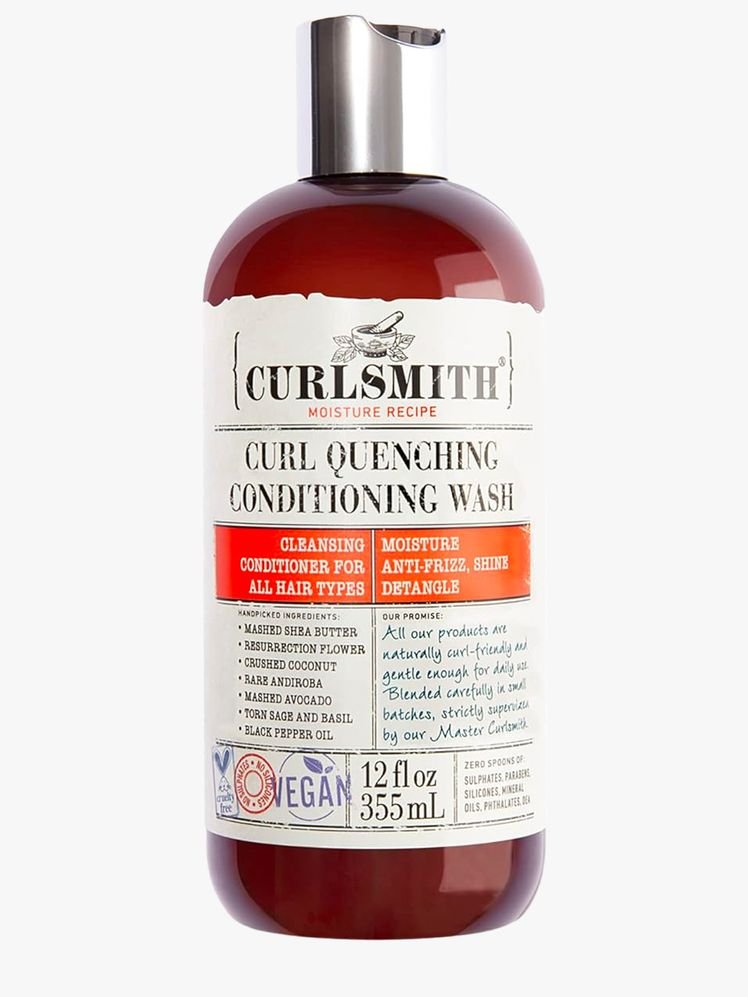
Curlsmith
Curl Quenching Wash
“A good conditioner softens, a great one engineers the curl,” Rajpowell explains. “A balanced moisture protein mask is the hero. Apply to damp hair, mid-lengths to ends, and let it sit with gentle heat for 10–15 minutes so it actually penetrates, not just coats. Heat isn’t mandatory, it’s a catalyst, not a requirement.”
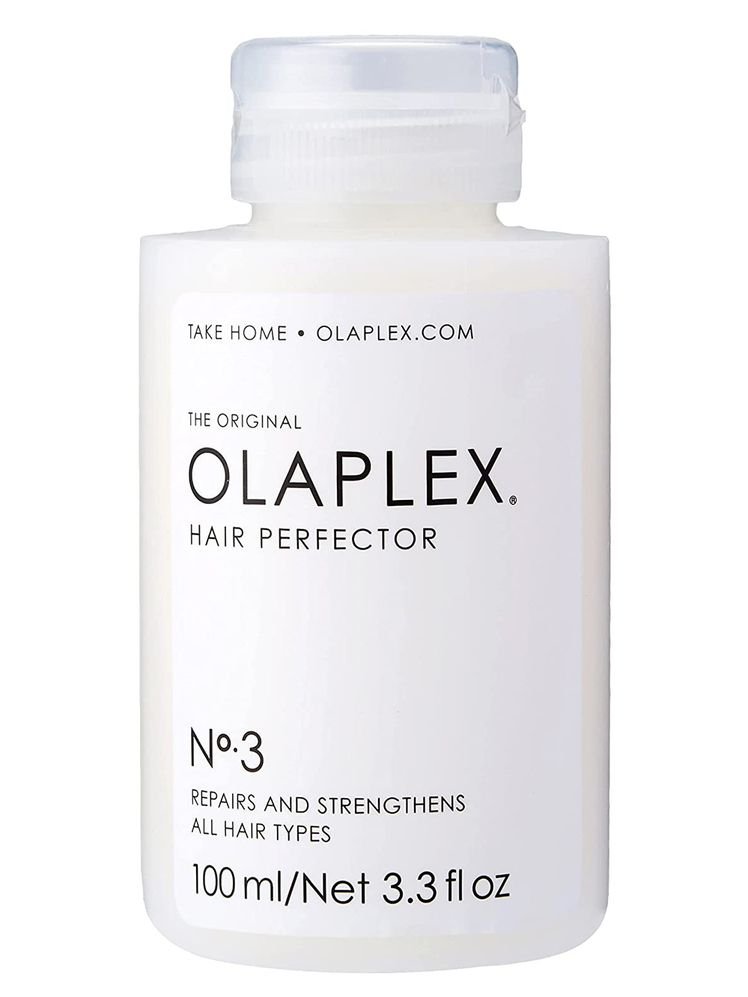
Olaplex hair repair mask
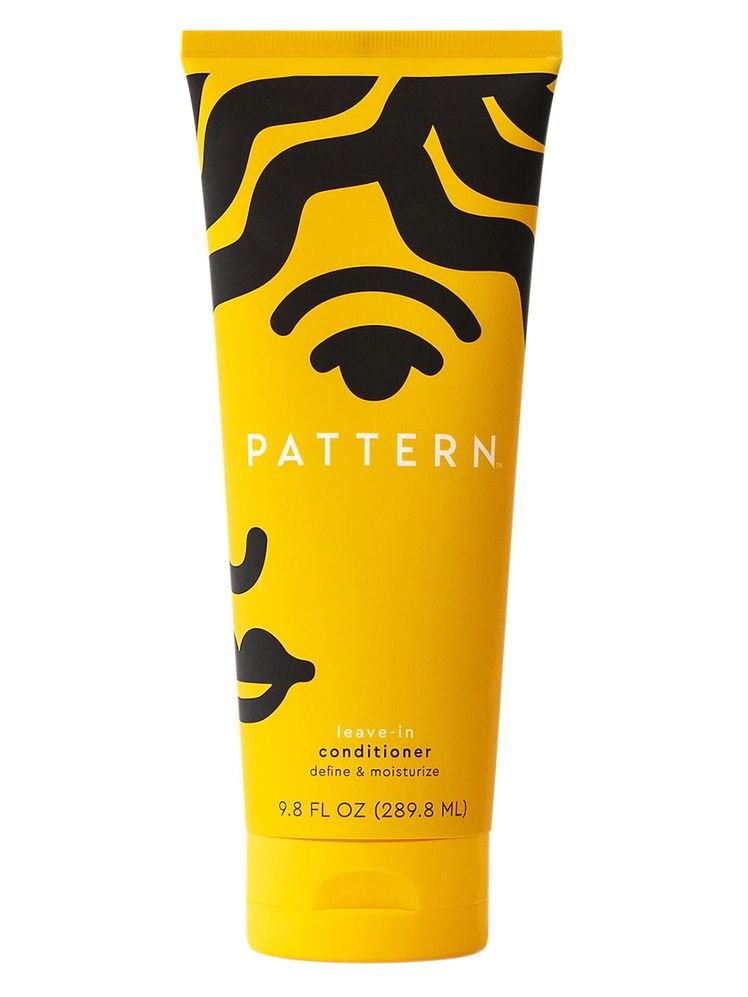
Pattern leave-in conditioner
There’s a narrow window after washing where curls are at their most cooperative, and most men miss it entirely. “Most men’s problem areas (like a flat crown or frizzy front) can be solved by simply not towel-drying aggressively,” says Rajpowell. “Rubbing a towel over your head creates friction that destroys curl definition instantly. Men skip setting the curl while it’s still water-loaded, and once that window closes, you’re fighting the hair instead of guiding it. Curls need products applied immediately on soaking-wet hair to lock in hydration and form. Delay is what creates frizz, not the curl itself.”
If your routine depends on a single product, it’s already underperforming. “It’s a cocktail styling method,” Rajpowell says. Her approach relies on a cream to hydrate and soften, a gel to create structure and hold, and a mousse to introduce lift without weight. “Moisture lays the foundation, gel holds the shape, and air through mousse keeps the curl elevated,” she says. Such interplay is what matters. Too much of one element and the curl collapses, either into dryness or heaviness.
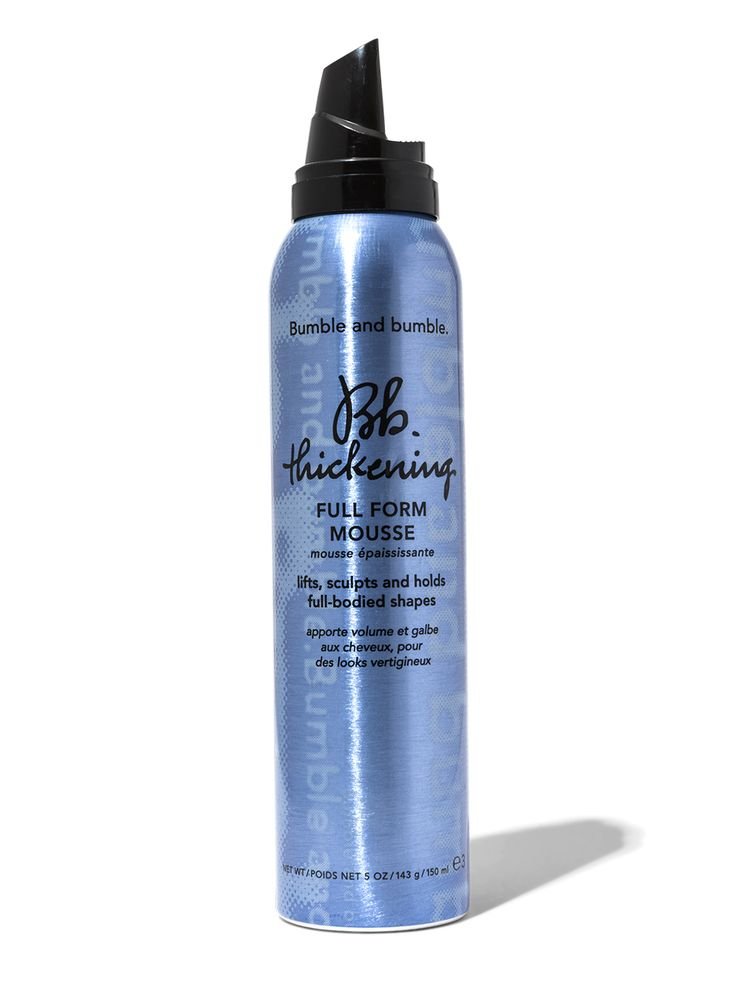
Bumble and Bumble thickening full form mousse
Thinning hair needs more volume. This mousse adds that without overdoing it.
“Work on soaking-wet hair as damp hair dilutes control,” Rajpowell says. “Water is your distribution system, and technique is concerning guiding the curl into place, not forcing it.” The coveted Rajpowell method is as follows:
- Section your hair, rake your leave-in cream through each section using your fingers. Follow this with praying hands, clapping your hands together over a section of hair, and sliding down to smooth the cuticle.
- Once the creams are in, scrunch upwards toward the scalp. You should hear that squelch sound.
- Gently glaze the gel onto your hair, then scrunch again. This locks everything in without breaking the curl clumps you just formed.
- After products are in, use a microfiber towel or an old cotton T-shirt to gently scrunch your hair. This absorbs excess water, so your hair doesn’t take 10 hours to dry, while keeping the product on the strands. Once applied, stop touching it. Let it air dry or use a diffuser. Touching your hair while it’s drying is the number one cause of frizz.
- Scrunch out the crunch: Once your hair is 100% dry, it will feel crunchy from the gel. Use a tiny drop of hair oil on your hands and scrunch your curls one last time to break the cast. You’ll be left with soft, bouncy, defined curls.
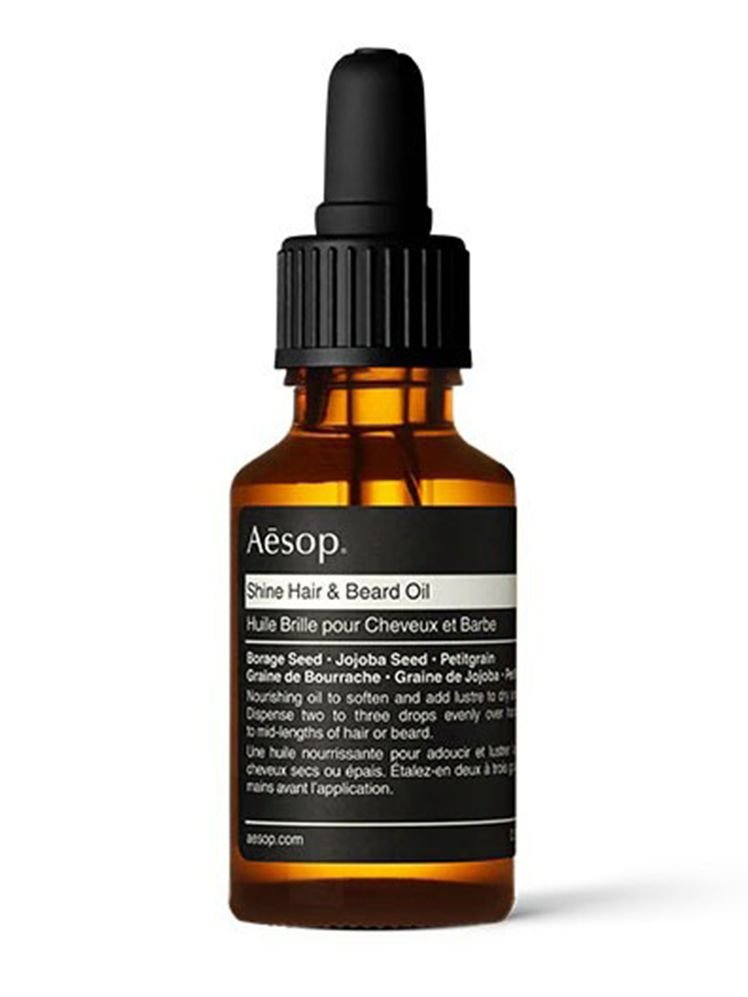
Aesop Shine hair and beard oil
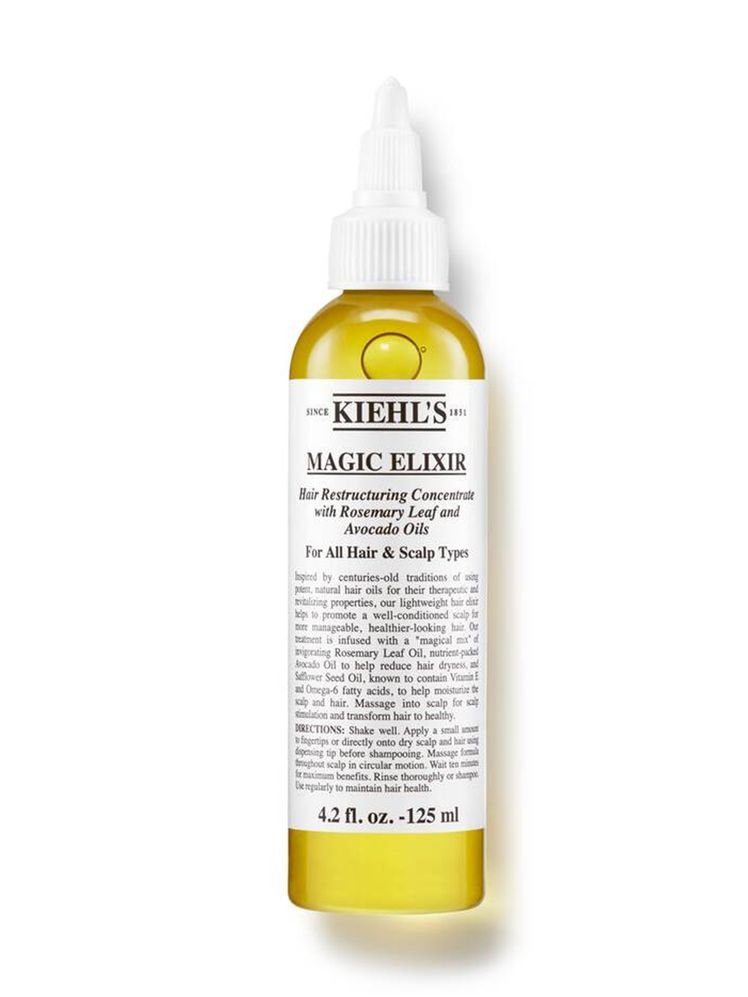
Kiehl’s magic elixir scalp and hair oil treatment
The answer depends on intent. “Air-dry when you want a softer, looser finish, diffuse when you need controlled definition,” Rajpowell says. But technique, again, is everything. The common mistake is impatience, cranking up the heat, moving constantly, chasing speed. “You need low heat, low airflow, and patience to set the structure,” she explains, adding that a final cold shot helps lock everything in place.

Dyson
Dyson Supersonic™ hair dryer
Trust us: She wants the expensive hairdryer. You may not understand how its Supersonic technology works (or why it’s $450) but she will, and she’ll love you for it.
Maintenance should feel like maintenance, so “revive, don’t restart,” Rajpowell says. “Lightly mist with water to reactivate the product already in the hair, then reshape with your hands, not more product. Curls have memory, a touch of leave-in is enough. Layering again can suffocate the pattern.”
Oils have long been miscast in curly routines. “They are frequently misused as moisturizers rather than sealants,” Rajpowell says. Applied to dry hair, they trap dryness inside, leaving the surface glossy but the strand dehydrated. The correct approach is more strategic. “Always apply oil to damp or wet hair after a water-based leave-in or cream. This traps the hydration in.”
“Climate rewrites the hair’s chemistry,” Rajpowell says. Humidity swells the hair, lifting the cuticle; heat accelerates moisture loss, destabilizing the curl pattern entirely. The response isn’t to pile on more product, but to shift strategy. Rajpowell’s method is as follows:
- Sweat, styling product residue, and hard-water mineral deposits coat your hair quickly. Use a chelating or clarifying shampoo every 1–2 weeks to remove these minerals so your hair can actually absorb the moisture you provide.
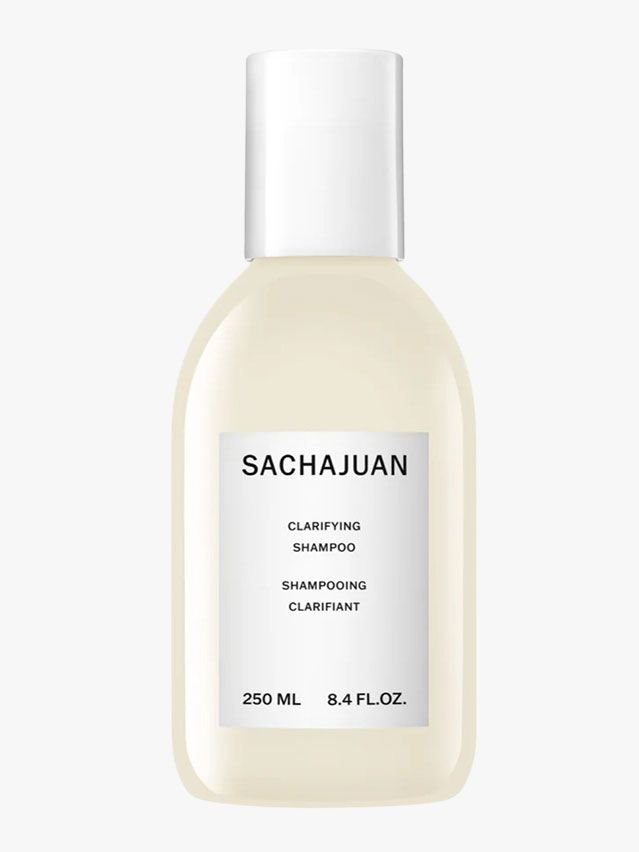
Sachajuan
Clarifying Shampoo
- Apply a lightweight hair oil to your scalp and leave it on for 30–60 minutes before washing. This acts as a barrier against the hard-water-stripping effects.
- Always finish your shower with cool water. This helps tighten and seal the cuticle before you even start styling.
“Treat sweat and chlorine as external disruptors,” Rajpowell says. “If you exercise daily, use a co-wash instead of shampoo for 3 out of 4 workouts. It cleanses the salt off the scalp while keeping the hair hydrated. For swimmers, drench your hair in fresh tap water. Your hair is like a sponge if it’s already full of clean water, it can’t absorb as much chlorinated water. And apply a light conditioner or a penetrating oil to your wet hair before putting on your swim cap.”
This story originally appeared in GQ Middle East.
Source: GQ
Original publication date: 2026-05-04T09:00:00.000-04:00