
How to style a goatee beard

Republished source article: This article originally appeared in British GQ. First-person statements, product selections, quotations and editorial-team claims belong to the original source.
By: Adam Cheung
Years ago, rocking a goatee beard was seen as a bit of a joke. It was the go-to style for guys who thought they were much cooler than they were. But, eventually, guys who were actually really cool started adopting it as part of their everyday look. George Clooney had one. Johnny Depp, too. And it was also the signature vibe for characters like Tony Stark in Iron Man and Walter White in Breaking Bad. Basically, if you wanted to look badass, the goatee was the GOAT.
That’s good and all, but it’s also one of the most difficult beard styles to achieve and maintain. That doesn’t mean it’s impossible, though. So, if you want it, you’ll be pleased to know we sat down with TJ Hunt, barber at Time Shoreditch, and Maxwell Oakley, co-founder at Supply 91, to find out everything you need to know to style a goatee beard.
SKIP TO: What is a goatee? | What’s the difference between a goatee and a Van Dyke? | What are the different types of goatees? | What’s the best type of beard trimmer for a goatee style? | Top tips for trimming a goatee | How to grow a goatee
So, what even is a goatee? Essentially, it’s a beard where the sideburns and cheeks are shaved free of facial hair (or at a push, short stubble), and the hair around the chin, moustache, soul patch, and any adjoining areas linking them are left longer.
“Usually, the edges of the moustache are the boundaries, and the baseline stretches to around an inch under the chin,” says Hunt. “The result, if your beard grows fully in this area, is an almost circular-shaped beard in the centre point of your jawline.”
“This is a style that works really well if you struggle to grow hair on your cheeks and jaw,” says Oakley. “If you’re not sure where to begin, look to Adam Driver, Austin Butler, and Keanu Reeves for some solid inspiration.”
So a goatee and a Van Dyke are the same thing, right? Well, not exactly. While both of these looks seem quite similar, there are actually some pretty big differences between the two styles.
“Traditionally, the goatee beard connects between the moustache and chin, whereas the two areas are disconnected in a Van Dyke,” says Hunt. “Also, the chin area of the latter tends to be pointed downwards, whereas the chin area of the former tends to follow the shape of the chin more naturally. However, lines have been blurred over time, and the two have sort of meshed together in some instances.”
“A goatee is usually a small beard on the chin, sometimes with a moustache, sometimes without,” says Oakley. “It’s a broad term, but technically, a Van Dyke is a more defined style – a goatee paired with a moustache, but with the two kept separate.”
Like every other beard style out there, there are quite a number of different goatee types, and which one you opt for is very much down to personal preference.
“For example, a ‘chin puff’ is typically a style where the facial hair is grown from the bottom of the lip down to the chin, often without a moustache,” says Hunt. “A distinctive look for sure. Think Fred Durst but without those crazy pointy sideburns.”
A ‘circular chin puff’, however, is a more wearable style rocked by many people who have coiled beards. It tends to sit lower on the chin with the soul patch lopped off.
“The ‘anchor’ beard is similar to a Van Dyke in that the chin area is pointed but with the addition of a soul patch. These tend to suit guys with facial hair that grows out straight. For a classic ‘full’ goatee, think less Van Dyke and more Sean Dyche. It’s the whole shebang – moustache, soul patch, and chin – in perfect harmony.”
OK, so you’re thinking of getting a goatee. Now it’s time to invest in some solid equipment and a decent beard kit. In an ideal world, you’d have two trimmers in your arsenal: one to shift bulk and one to do the intricate detailing stuff.

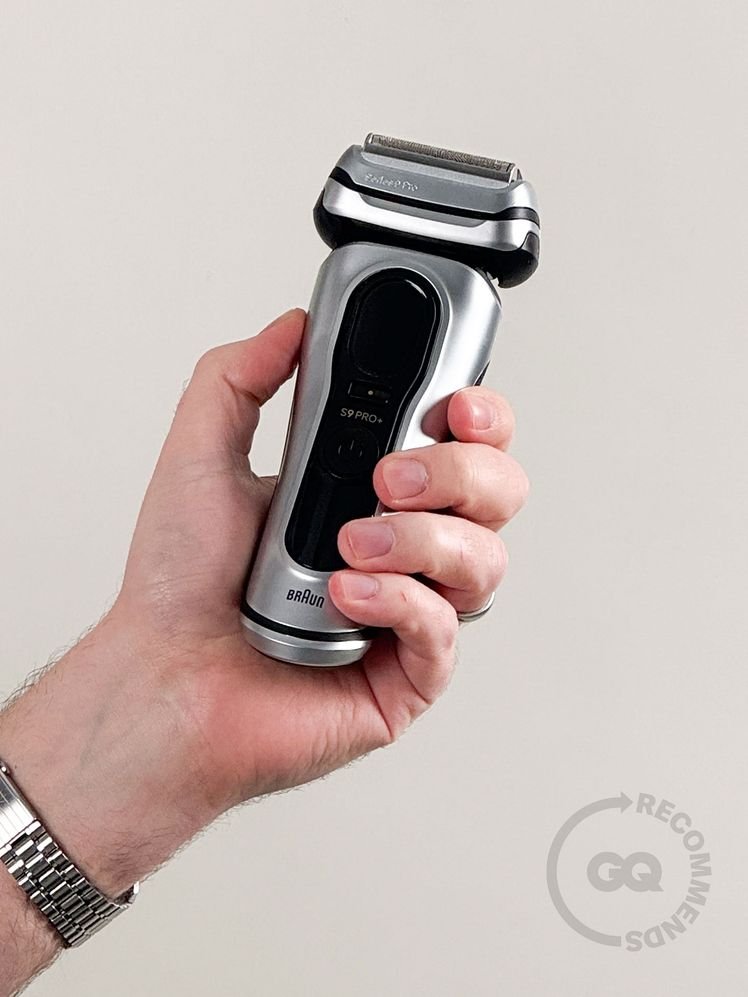
“The bulk shifter could be a hair trimmer or beard-specific trimmer, but it needs to be powerful enough to avoid snagging and have changeable length levels in case you choose to go longer or shorter,” says Hunt. “The details are best done with, well, a detailer. They tend to have a narrower, sharper blade, and they’re used to get those satisfyingly crisp lines. If you don’t have the bathroom space, or just want to keep things simple, then you’ll need one piece of kit that can sort of do both. Something that offers a variety of length options but can also have the guard removed.”
“I recommend the Andis Slimline Pro or the Wahl Clipper Detailer,” says Oakley. “Both of these are precise, perfect for super clean lines, and they pack a punch. They never snag hairs, cut smoothly every time, and are built to last.”
If you’re going from a full beard to a goatee, then mark out the area first. Use a detailer or the bare blade of your clippers to draw out the basic shape before you clear everything on either side. This way, you can get an idea of what the shape will look like and make little amendments before diving in.
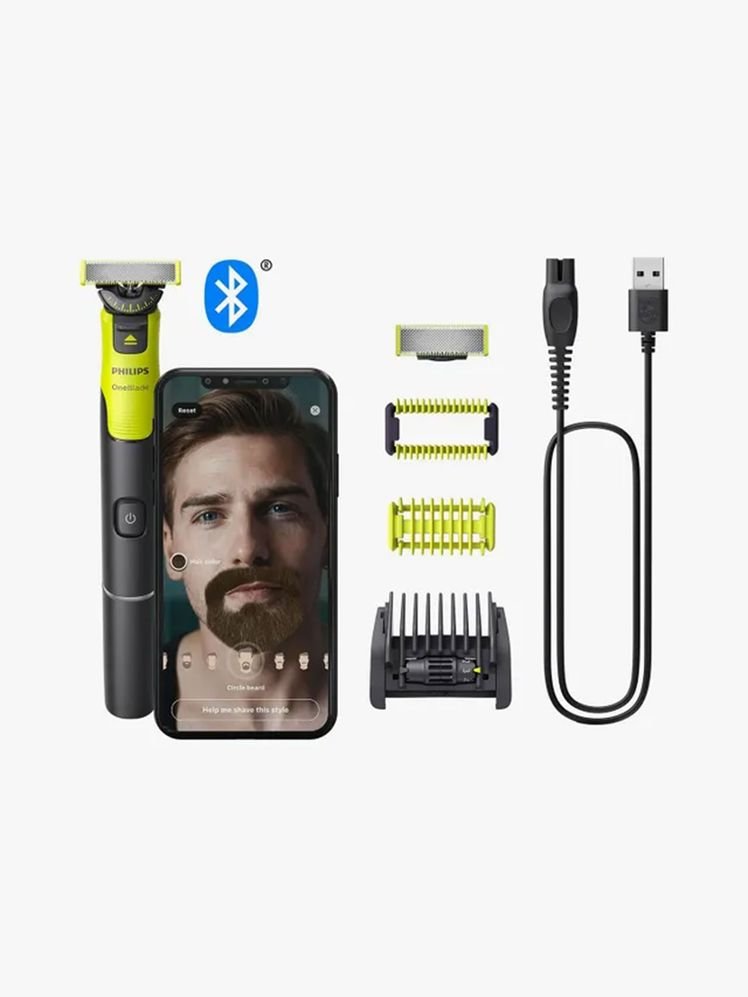
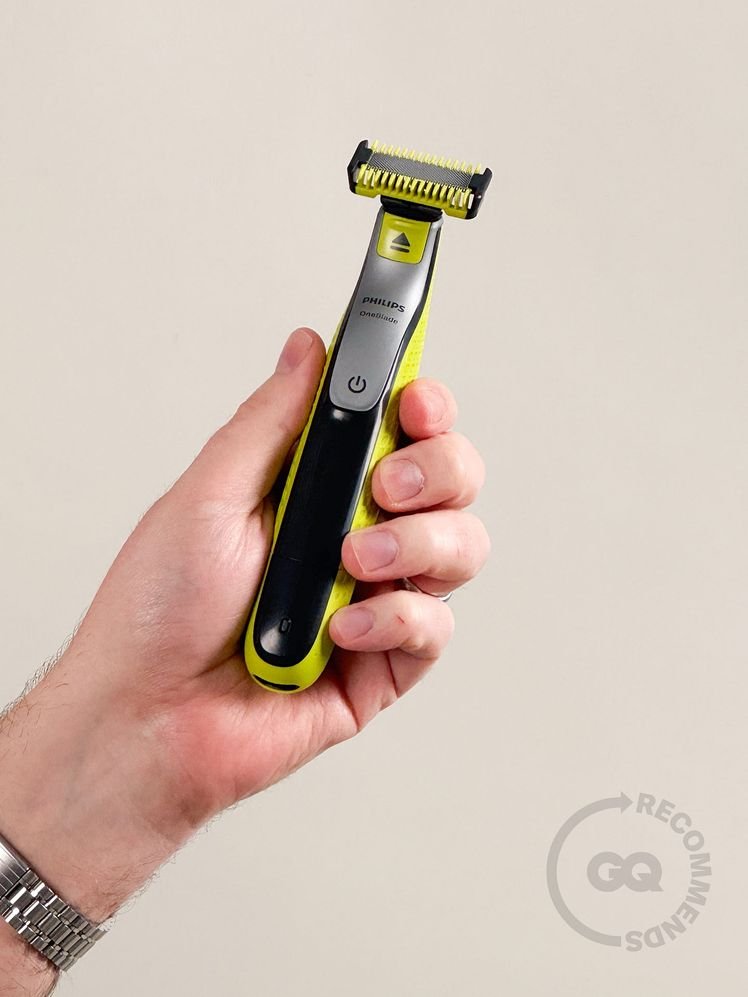
Philips
OneBlade Pro
“If you just go full bore and it’s too narrow, then there’s no going back,” says Hunt. “Be sure to brush out all the hair first to make sure there are no tangles or coils. If you go straight in and then brush it out after, you may find the finished effort is less even. If the beard still appears a little tufty or uneven, then use a set of nail scissors to nick the ends off individual strands causing the issue. This will give you a smoother, less patchy final look.”
“Trimming a goatee properly takes a bit of attention,” says Oakley. “Use a quality beard trimmer with adjustable settings to ensure an even length, and always define the shape first before trimming down. Symmetry is key, so take your time outlining both sides evenly. Also, it’s important to trim gradually, as it’s always better to take off too little than too much. Finally, use a razor or precision trimmer to clean up stray hairs around the edges.”
OK, so you’ve got the tools, and you’ve got the technique. Now, it’s time to actually grow the goatee of your dreams. It can be a bit of a pain in the first instance, but the best way to do it is to grow out the entire beard and then carve the goatee into it.
“The benefits of doing it this way are twofold,” says Hunt. “Firstly, the difference will be more striking, and nobody will wonder what you’re doing as you progress from chin stubble, fluffy moustache, and bare cheeks to the final look. Secondly, it’s easier to cut in a good shape this way as the lines are more noticeable. If you’re trying to create a distinctive line between shaved cheeks and stubble, it can be pretty hard to see clearly what you’re doing. However, if you are doing the same thing with a couple of centimetres of growth, then things will be much clearer.”
“It’s essential that, during the grow-out stage, you resist the urge to shape it too soon, as you need enough length to work with,” says Oakley. “Once you’ve got some decent growth, use a trimmer to define the shape, shaving the cheeks and jawline to isolate the chin and moustache area. Regular upkeep is key, as it’ll keep your goatee looking fresh and well-groomed at all times.”
Source: British GQ
Original publication date: 2025-02-19T13:11:42.311+00:00